JULES DUMONT

I graduated with a master's degree in physics engineering from École polytechnique de Bruxelles, where I completed my thesis on spectral analysis methods for quantum approximate optimization algorithms.
My academic path and side projects led me through quantum physics, meteorology, machine learning, and nuclear physics, ultimately specializing in applied mathematics with a strong foundation in numerical analysis and scientific computing. I have always been passionate about people's intellectual journeys across fields and about new interesting theoretical subjects in math, physics, and computer science. I'm drawn to problems where rigorous mathematics meets computational implementation.
Favorite subjects of the moment: data assimilation, algorithmic information theory, physics-constrained machine learning, proof assistant programming, univalent foundations & HoTT, quantum algorithm and cryptography.
For more details, see Curriculum Vitae.
Contact Info
- E-mail: jules.dumont@ulb.be
- E-mail: jules.pierredmt@gmail.com
News
| Feb 2026 | Master thesis defence |
| Feb–Jun 2025 | Teaching Assistant at EPB |
| Jan 2025 | Intensive one-week course in accelerator physics at CERN |
| Summer 2023 | Internship at Tractebel (Project) |
Projects
Physics Informed Machine Learning for Dynamical Systems & Weather Forecasting
Tools used: Long Short Term Memory cell in Recurrent Neural Network with physical loss function
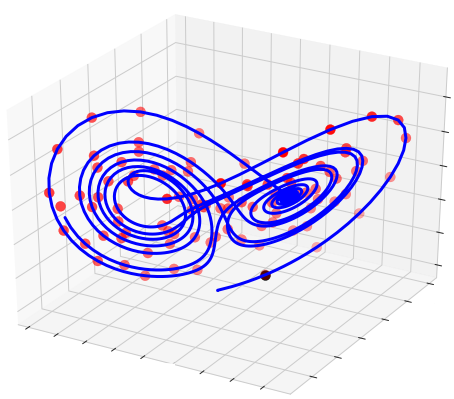
Explored physics-informed approaches to learning chaotic dynamical systems, embedding known governing equations (Lorenz-63 and Lorenz-96) directly into neural network loss functions. On the Lorenz-63 attractor, a Transformer-based HyperNetwork dynamically generates the weights of a prediction MLP from context trajectories. On the higher-dimensional Lorenz-96 weather model, an LSTM and an encoder-decoder Transformer reconstruct full system states from partial observations and reproduce statistical properties of the chaotic system.
Read MoreCritical Heat Flux Prediction in Nuclear Reactor using Deep Learning
Tools used: Deep Neural Network with parallelized hyperparameter optimization
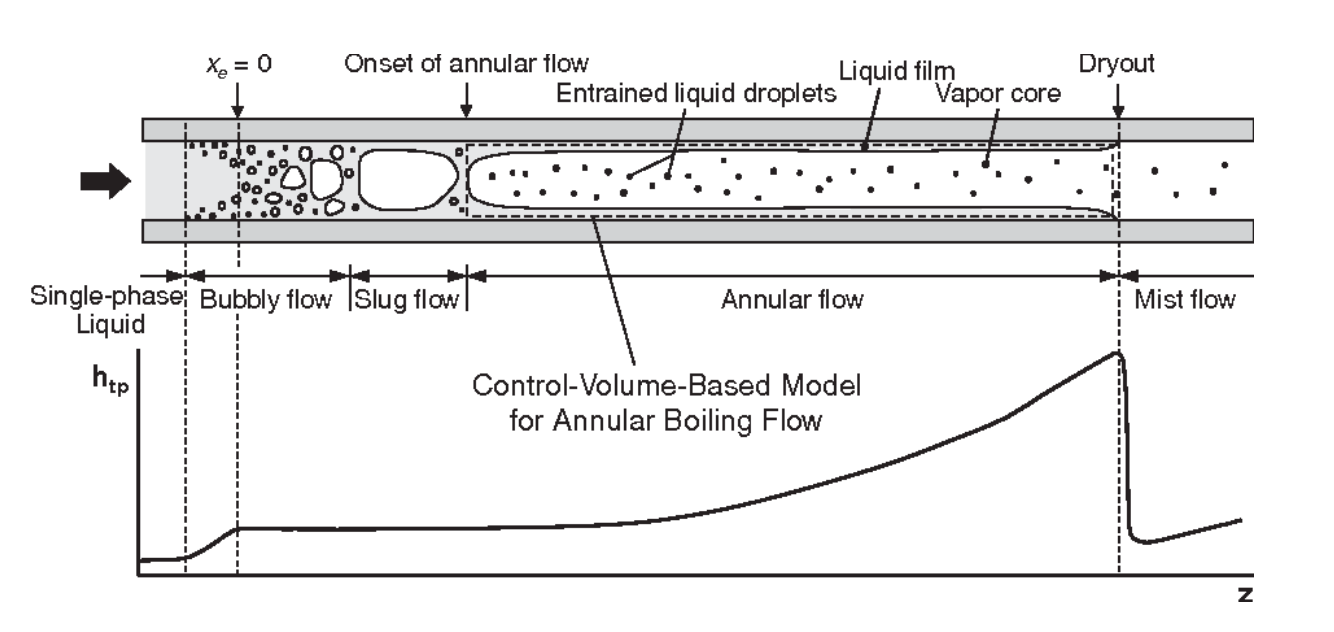
Trained a deep neural network to predict Critical Heat Flux in nuclear reactor fuel elements, replacing traditional look-up table interpolation. The full pipeline extracts data from the Groeneveld 2006 LUT PDF, applies physical filtering and normalization, and uses a parallelized Bayesian hyperparameter optimization via Optuna with multiprocessing to search over architectures, learning rates, and regularization.
Read MoreSolving Partial Differential Equations Efficiently in C Using Numerical Methods
Tools used: Multigrid algorithm as preconditioner for Conjugate Gradient iterative method
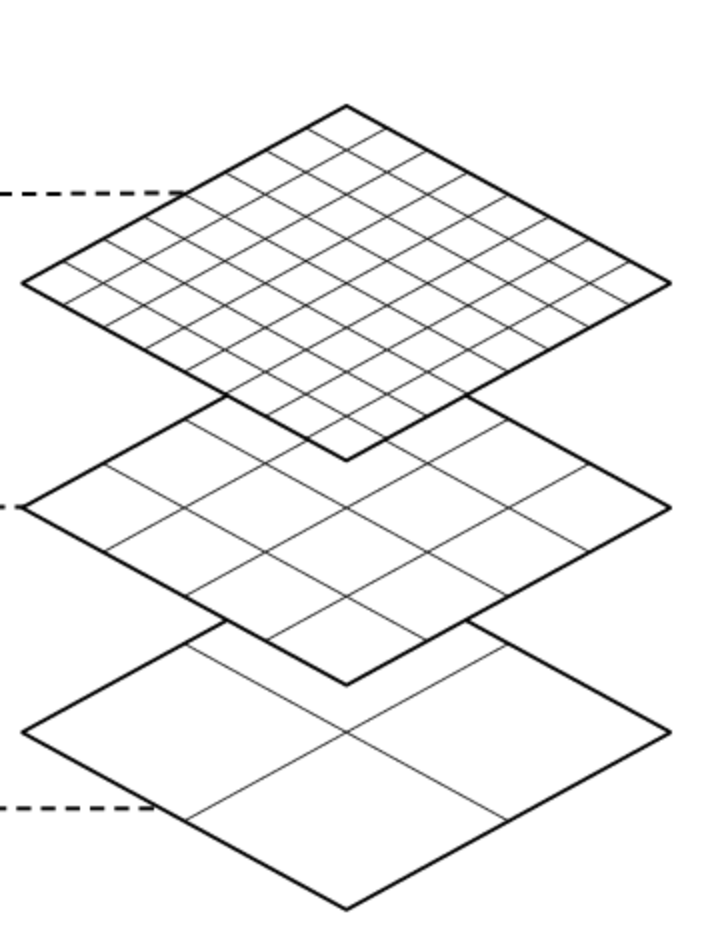
Implemented a geometric multigrid solver and multigrid-preconditioned conjugate gradient in C for the 2D Laplace equation on rectangular domains with rectangular holes. The system is discretized with the 5-point finite difference stencil and stored in CSR format. Supports V-, W-, and F-cycles with Gauss-Seidel smoothing, full-weighting restriction, bilinear prolongation, and a choice of coarse-level solvers including UMFPACK.
Read MoreRumors on Social Media Detection Using Machine Learning and Big Data Processing Technique
Tools used: Dimension reduction using Singular Value Decomposition for embedding and LSTM combined with FNN to classify
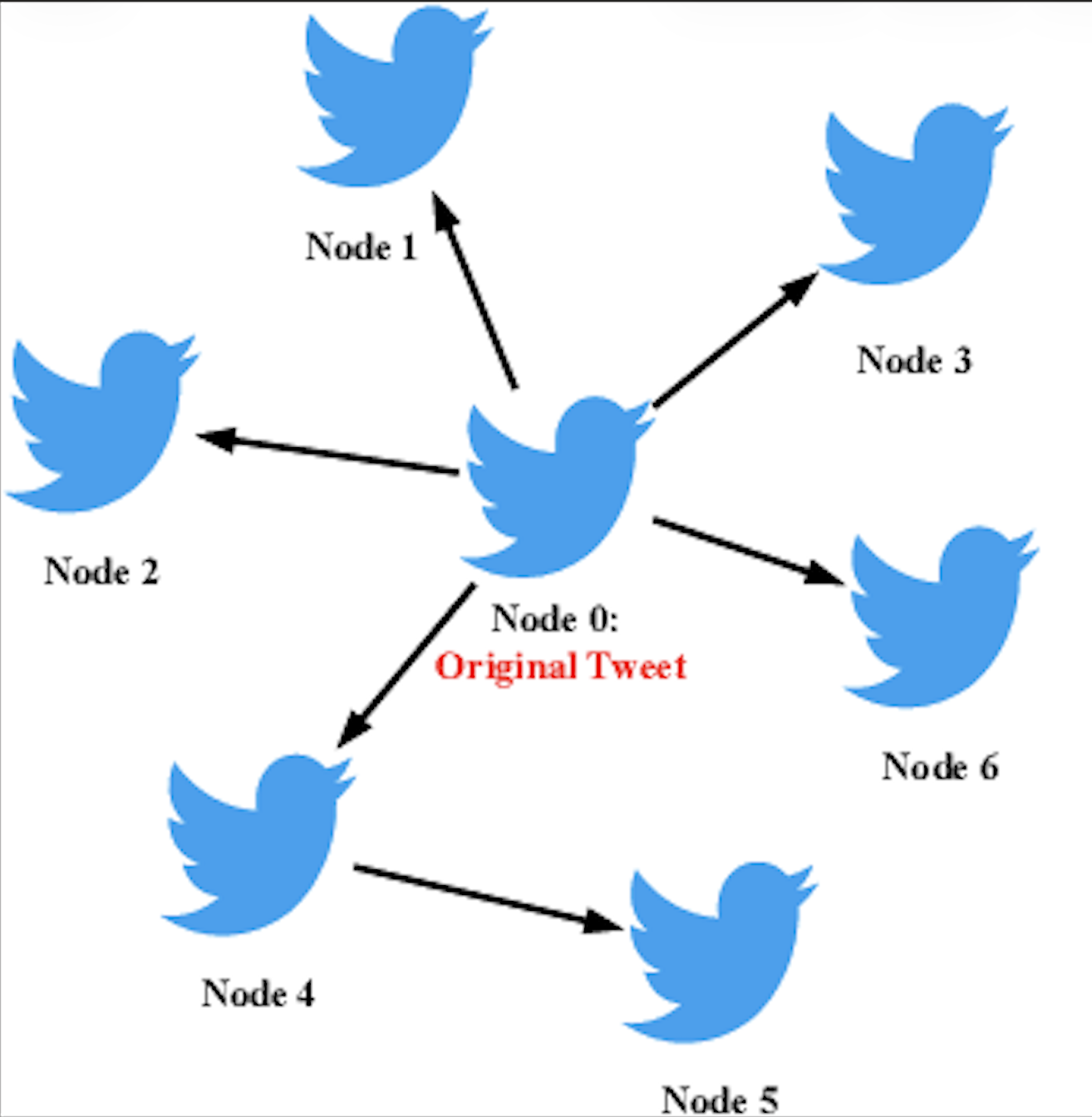
Implemented the CSI (Capture, Score, Integrate) model for classifying social media threads as rumor or non-rumor. User behavior is embedded via truncated SVD of a user-thread incidence matrix, tweet text is compressed from 384 to 100 dimensions using Gaussian random projection, and temporal engagement patterns are captured by an LSTM over hourly bins. A feedforward network scores user credibility before final classification. Tested on PHEME (Twitter) and Weibo datasets.
Read MoreCryptography: RSA Algorithm Implementation in C
Tools used: From Fermat's little theorem to pseudo prime generation for public and private key, creation of datastructure for 2048 (>64) bits number and adaptation of binary arithmetic operation
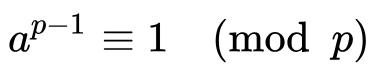
Built a complete 2048-bit RSA cryptosystem from scratch in C, including a custom arbitrary-precision integer library using uint64 arrays with all arithmetic reduced to bitwise operations. Prime candidates are validated with 12-round Miller-Rabin tests, keys are derived via the extended Euclidean algorithm, and decryption uses blinding to resist timing side-channel attacks. A minimum-d threshold guards against Wiener's attack.
Read MoreMaster Thesis
Randomized Quantum Approximate Optimization Algorithm
Tools used: Map from variational optimization to optimal control problem, entropy regularization, Jacobi-Anger expansion, efficient Monte Carlo estimation for trainability diagnostic of MaxCut instances
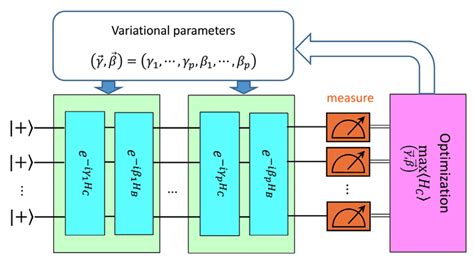
Developed a probabilistic framework for QAOA by modeling the variational algorithm as a continuous-time Markov process, where switching between Hamiltonians is governed by stochastic rates rather than fixed angles. Entropy regularization yields exact analytical solutions for the transition density in terms of modified Bessel functions. A spectral analysis links the Fourier spectrum of the cost landscape to trainability, producing a polynomial-time Monte Carlo diagnostic that detects Barren Plateaus at first round of the optimization process by simulating quantum signal-to-noise ratio.
Read MoreTeaching
Assistant at EPB
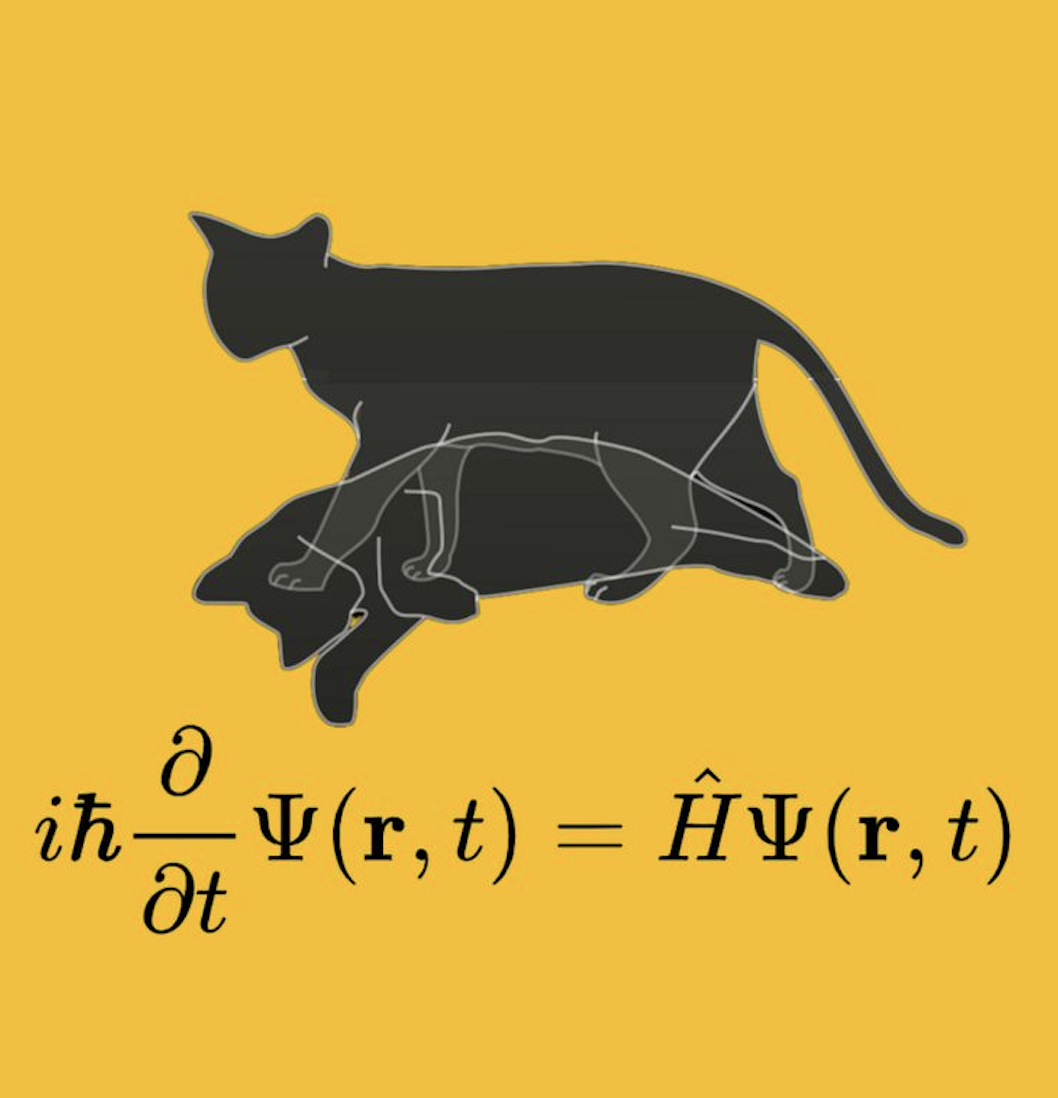
Teaching assistant for practical sessions of the second-year undergraduate course "Introduction to Quantum Physics and Statistics" at École polytechnique de Bruxelles during academic years 2024-2025 and 2025-2026.